1- Essential Tremor:
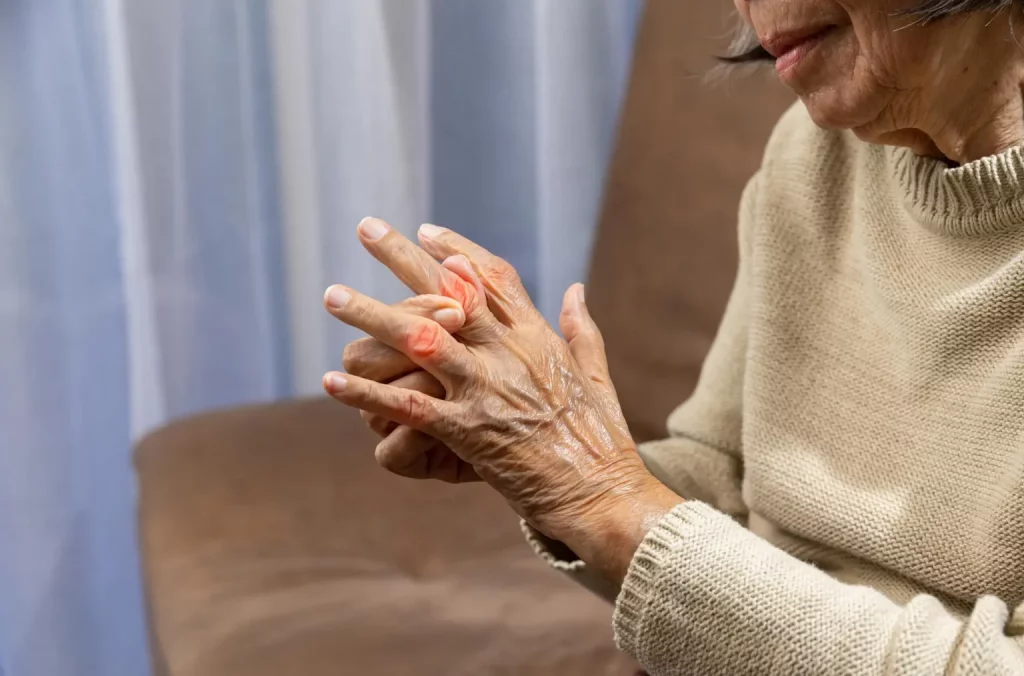
Essential Tremor is the most common movement disorder worldwide. In our country, we know that it is found in 4 out of 100 people over the age of 40. Essential Tremor patients often complain about uncontrollable tremors in their hands, head, and voice.
This condition often worsens in newly encountered environments, crowded places, and stressful situations, leading to embarrassment for the patients. The tremor in the hands typically increases when the hands are extended or during fine motor movements such as holding a glass, spoon, or writing. The tremor stops when the hands or arms are at rest or not actively engaged in any specific action.
In more than half of Essential Tremor patients, there are other individuals in the family who also experience tremors. Although researchers have not yet fully identified all the genes that cause this disease, it is well-known that Essential Tremor has a genetic component.
The diagnosis of the disease and its differentiation from Parkinson’s Disease can be easily done with a careful and detailed examination. In this condition, tremors can gradually increase over the years. Medication treatments are available to help patients with activities such as eating, drinking, and writing in order to prevent difficulties and embarrassment. While there is no definitive cure, it is possible to alleviate the symptoms of the disease with medication.
For patients who do not respond to medications or have tremors severe enough to interfere with their daily activities, surgical options such as Deep Brain Stimulation (DBS) or non-invasive treatments such as MR-Guided Focused Ultrasound (MRgFUS) can be a good choice. DBS, which is also used in Parkinson’s Disease, can effectively reduce or nearly eliminate tremors in patients with Essential Tremor.
2- Tremor in Parkinson’s Disease:
Parkinson’s tremor occurs at rest.
Tremor disappears with movement. It typically begins in one limb or on one side of the body and can progress to the other side. Tremor is not the only symptom of the disease; it is often accompanied by various signs such as muscle rigidity, slowness of movement, reduced facial expression, and changes in voice.
3- Dystonic Tremor
This type of tremor occurs in people with dystonia, a movement disorder characterized by involuntary muscle contractions. It typically manifests in a specific position.
4- Physiological Tremor
Usually caused by certain medications, alcohol withdrawal, hypoglycemia (low blood sugar) or medical conditions such as an overactive thyroid. Physiological tremor disappears if the underlying cause is treated.
5- Orthostatic Tremor
It is typically seen in the legs. It is a rapid, rhythmic muscle contraction that occurs immediately after standing up suddenly. The tremor stops when the person sits down or starts walking.
6- Cerebellar Tremor
It is a type of tremor that occurs due to damage in the cerebellum, a part of the brain responsible for movement coordination. It is often accompanied by imbalance. The tremor typically worsens when approaching a target or during purposeful movements.
7- Psychogenic Tremor
It is a type of tremor that is induced by psychological factors. The tremor significantly diminishes when the person’s attention is distracted or focused elsewhere.